
Call us on: +91 87991 42717
Study in Germany
- Home
- Study in Germany
Why Study in Germany?
The International Student’s Guide to Free-Tuition Education in Germany
Benefit from a high-quality educational system to help you advance in your career, learn a new language by making new friends and socializing with other students, and gain an amazing life experience to remember for years to come by studying and living as a foreign student in Germany. There are hundreds of universities in Germany that have free or very low-fee tuition programs available for international students. Whether you want to study Engineering, Medicine, Architecture, or Business, Germany is the place to be. Combining high quality education with a unique cultural experience living in Germany is the main reason why young people from all around the world come to Germany.

Are You a Higher Education candidate?
If you’re interested in covering Germany as an ideal study abroad destination for international students, we can help you with your story!
- – Free-tuition education in most universities (and very low fees in others).
- – World class education by highly qualified staff.
- – Hundreds of academic courses to choose from.
- – Interesting country to explore with a profound history.
- – Cultural diversity and students from all over the world.
- – Practice speaking both English and German.
- – Endless opportunities to work in Germany after you graduate.
- – You can study every subject in English, no need to speak German.
- – The cost of living in Germany is affordable, averaging around 720-850€ including rent, food, transport, health insurance, telephone/internet, study materials and leisure activities.
- – The chance to live and explore one of the world’s most developed countries and its unique culture, history and landscape.
– To increase your chances of getting admitted at a Germany university, learn more about the requirements for international students, and best prepare yourself for studying and living in Germany, check out our FREE guide for international students.
8 Steps to Study in Germany
From finding a suitable study program to enrolling at a German university.
If you’re wondering about what you need to do to study in Germany, and you’re confused by the amount of information available on what steps you need to take, you’re at the right place.
We have simplified the process of studying in Germany as an international student into 8 steps you need to go through. Follow these 8 steps one by one to keep track of where you are right now and what you need to do to make your dream of studying in Germany a reality.
– The application process to study in Germany:
- – Find a Study Program.
- – Meet All Requirements.
- – Learn The German Language (if required for the program).
- – Find Financial Resources.
- – Apply For Admission.
- – Get Your German Student Visa.
- – Find Accommodation.
- – Enroll At Your University.
1. Find a Study Program
(Start researching at least 3 months before deciding)
Finding a university and choosing a study program that suits your interests is the first step to planning your studies in Germany.
This is not supposed to be a major problem because there are many universities and countless study programs available – and their quality is undoubtedly world-class. Regardless of what direction you want to go in life, there will certainly be a study program that will match your studying aspirations and plans.
But finding a university and a study program may take time if you haven’t given much thought to this matter before starting your application process to study in Germany. The high number of available courses could be one of the reasons you haven’t decided yet.
We suggest you think about the study program at least 3 months before making a final decision. This period of time is enough to allow you to scan all German universities that offer courses related to your professional field.
Once you find those German universities, you can focus on a smaller list of universities that seem ideal for you. You can either decide to focus on just one university or apply to several that you like best to increase your chances of securing admission.
Finding a university and study program is very important because it determines everything.
Here is the list of universities in Germany.
Here is a guide on how to choose the right university for you in Germany.
2. Meet All Requirements
(Two weeks before the application is opened)
Now that you have decided what university and what study program you want to attend you must check out all the requirements. For this purpose, you check the university website and their admission requirements section. If there are things, you don’t understand never hesitate to contact the university directly.
Entry requirements are different depending on the university and the type of course you choose, so it’s recommended to read the requirements section multiple times.
Bad timing and missing documents are the most common issues that happen at this stage, and both can lead to delayed admission or even rejected applications. To avoid such possibility, you must prepare these documents early enough.
For example, sitting for a German language proficiency standardized test you need to take a language course for at least three months. If you start learning German from scratch it takes way longer than this.
Further legalizations of your documents may have a similar processing time until they’re issued to you. Taken any occasional delay originating from the nature of the process, you must start preparing your documents at least 4 months before applying for your place at the university.
3. Learn the German Language
(Start learning it 6 months before the application or the course commencing)
Your success at university highly depends on your skills in the German language, even if your program is in the English language. Having a solid-rock knowledge in the German language guarantees you will comprehend study materials, understand what is taught in lectures while being able to express your thoughts properly.
In Germany, most undergraduate courses are taught in the native language, whereas many study programs at higher academic levels are taught entirely or partially in the German language. Other than at university, you will often have to speak German with locals.
Learning German from scratch can be difficult, but if you start early, by the time you come to Germany you’ll be speaking German perfectly. We recommend starting at least 6 months ahead of the commencing of your course (or before the application if German language proficiency is a requirement) to gain a basic comprehension of the German language.
You can also check out our list of the top language schools in Germany.
4. Find Financial Resources
(at least two weeks before you apply for a German student visa)
The next step is making sure you have the required financial means to live and study in Germany. Under the current law, every foreign non-EU or non-EEA student must have proper financial means to finance their stay in Germany during their studies.
An international student in Germany must possess a minimum of €11,208 which is estimated to be enough for a student to cover the cost of living for the first year of his studies. This amount of money needs to be deposited into a German-blocked bank account.
Important Tip: To Maximize Your Chances of Getting Your German Student Visa You Should Use a Blocked Account as Proof of Financial Resources.
A blocked account is a special type of bank account, to prove you have enough funds to live in Germany for one year.
As of 2023, as a foreigner in Germany, you need a minimum of €934 euros per month for living expenses. So, you are required to have a total of €11,208 in your bank account before you apply for a German internship visa.
Click here to learn more about the German Blocked Account
Naturally, for a student, this a large amount of money and takes time to collect. It’s highly recommended you start saving money a long time before you initiate your university application, except when you’ve been granted a scholarship and use it as proof of your financial means.
Normally, 6 months before your application would be early enough to start collecting this money and two weeks before applying for your student visa you must have them deposited.
- Apply for Admission
(As soon as you complete requirements)
After double-checking your application documents, it’s time for you to submit the application. The application can be carried online, but there may be universities that receive only applications in person or by post.
Contact your university to see you which way you can submit your application. Most German universities are part of the national university online application platform known as UniAssist. In addition to this, there are universities that run their own online admission platform on their website.
Keep in mind that universities in German are a hub for international students and admission committees are heavily loaded with foreign applications. Going through all the applications takes time and you need to submit your application as soon as possible to take advantage.
You must submit your application once the call for application is opened and then wait for the admission letter.
Depending on what level of studies you’re pursuing in Germany, the application procedures vary slightly.
6. Get Your German Student Visa
(As soon as you receive the admission letter)
If you’re a student coming from a non-EU and non-EEA country, you must get a German student visa.
For detailed guidance on how to get your student visa, please read our article “German Student Visa Requirements“.
Make sure you have secured the proper financial means for studying in Germany. One of the easiest and best ways to convince the authorities that you have enough money to cover your study and living cost is by opening a so-called Blocked bank account.
We suggest opening a blocked bank account with Expatrio. Expatrio is a German company and is officially approved by the German Federal Foreign Office.
Along with other documents, the German embassy/consulate in your home country will also require you to get a health insurance policy before granting you a student visa.
– Most international students in Germany prefer to get health insured with DR-WALTER.
– The health insurance tariff EDUCARE24 by DR-WALTER is suitable for the following groups of people:
- – Foreign exchange students, language students and students participating in university preparatory courses (Studienkolleg)
- – University students
- – Participants in exchange programmes (e.g. ERASMUS, DAAD, SOKRATES)
- – Trainees
- – Accompanying family members
Get health insurance by DR-WALTER online within a few minutes
7. Find Accommodation
(As early as possible. Start researching at least 3-6 months before arrival)
Now that you’re officially an admitted student in Germany and you have your student visa you must think of a place to stay in. Accommodation in Germany for international students is not that expensive but is normal that as a foreign student you should strive to find the most financially suitable place for you to live.
Keep in mind that finding accommodation in Germany is getting harder every year because of the limited number of student halls and shared apartments. Because of this many students are having a very stressful time.
We recommend you give the deserved priority to this issue because it may cost you a lot of time and money to find a solution if you don’t find accommodation early. With that in mind, you can try to find accommodation online before landing in Germany and pay the initial deposit to lock in your place.
8. Enroll at Your University
(First week after arriving in Germany)
The final step to officially be given a place at the university of your choice is to enrol in the course to which you have been admitted. In this sense, the enrolment process takes you from a successful applicant to a registered student in Germany.
Public higher education in Germany is offered for free, but you will still have to pay a registration fee which ranges somewhat between €150 and €250. Additionally, you will have to pay for your Semester ticket to use public transportation free of charge for 6 months.
To enrol on your university course in Germany you need to personally appear at the administration office of your university and submit the following documents:
- – Your valid passport
- – A passport photo
- – Your Visa or Residence Permit
- – Completed and signed Application Form
- – Degree qualifications (original documents or certified copies)
- – The Letter of Admission
- – Proof of health insurance in Germany
- – The payment fee receipt
Following your enrolment in the university administration will issue you a registration document (ID card) which can later be used for residence permit application and attendance of your classes.
An important note: You need to re-register each semester following the completion of the previous one and again you will have to cover the same registration costs.
APS
What is APS for India?
Simply put, the Academic Evaluation Centre (in German Akademische Prüfstelle) at the German Embassy in New Delhi is an institution-specific to studying in Germany. In general, students from India, Vietnam, mainland China, and Mongolia are required to go through the APS due to a large number of applicants. The APS India issues the APS certificate, which confirms that your documents are genuine and valid and that, consequently, you are eligible to study in Germany. Put differently, if your application for the APS certificate was successful, you will receive the certificate with which you can apply for a German student visa through the VFS and for German universities. It is worth mentioning that the APS certificate is valid for an unlimited period of time.
Is the APS certificate mandatory for Indian students?
Yes, the APS certificate is mandatory for almost every Indian student! Without the APS, Indian students usually cannot apply for a student visa. Hence, almost every Indian who wants to pursue a degree in Germany has to go through the APS.
However, as always, there are some exceptions. The Indian students do not need the APS certificate in the following cases:
- If they are funded by Germany- or EU-based scholarships
- If they are Ph.D. applicants, whose dissertation supervisor does not demand the document for registration
- If they hold international certificates from schools (e.g. A-Levels, International Baccalaureate) or universities
Note: Those Indian students who want to attend a short course (less than 90 days) in Germany do not need an APS certificate.
Documents required by the APS India
Depending on whether you want to do your Bachelor’s, Master’s or Ph.D. in Germany, the documents required for getting the APS certificate vary. Here is the list of documents for those who would like to do their Master’s in Germany:
- – Complete application form (printed and signed) with passport size photo
- – Copy of the verification fee receipt
- – Copy of Aadhaar card with linked mobile number
- – Copy of the first and last pages of your passport
- – Copy of 12th class certificate and transcript of records
- – Copy of 12th class admit card (upon availability)
- – Copy of the Bachelor’s certificate and transcript of records
- – Copy of language certificate
Keep in mind that you need to notarise only the documents translated into English from one of the regional languages.
APS India: Costs and Money Transfer
The APS certificate is not free: the processing fee for the APS equals 18.000 INR. Indian students have to transfer this amount to the APS bank account. The details of the account can be found here.
Take into consideration that once the money is transferred, it cannot be refunded (with no exceptions).
When to apply for the APS in India?
As soon as possible!
Why? Because getting the APS certificate, getting the visa appointment, and the visa processing time itself might take together several months. Thus, to increase your chances of arriving in Germany before the start of the semester, you need to act swiftly.
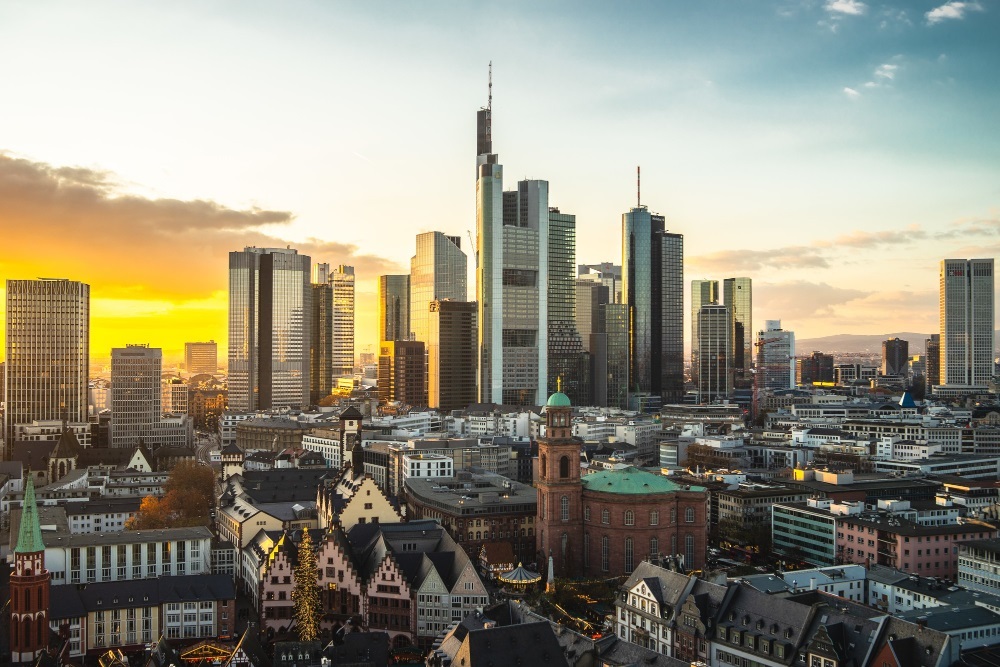
How To Apply For A Bachelor’s Degree in Germany
35% of all international students enrolled at German universities are seeking a Bachelor degree. It’s not hard to see why Bachelor’s study programs in Germany enjoy this unmatched popularity.
A German bachelor degree will equip you with a strong theoretical and practical understanding of your professional field open doors toward your future career and academic pathway.
To apply for a Bachelor’s degree in Germany you need a detailed step-by-step guide.
Follow the steps below to apply for a Bachelor’s degree program in Germany:
Choose the University and the Bachelor program
First, you need to decide what bachelor’s program is ideal for you and at what university you would like to study. In Germany, there are a lot of universities and study programs available for international students covering a wide range of subjects.
The structure and study modules of these courses are freely accessible to incoming students so you can compare your studying preference with their Bachelor programs.
When choosing a university and a Bachelor’s program, we suggest you take into consideration two things:
- The university and its location
- The content of the course
The former will indicate to a large degree the overall cost of your studies and your further educational career. If your university is located in a big city then it will influence the total cost of living in Germany as a foreign student. On the other hand, if you’re an ambitious and highly skilled student, you may prefer to narrow down the list of universities to only the most reputed ones.
Second, your understanding of the course content will remove the doubts you may have about what you want to study and will help you decide which course would suit your desires. There may be courses offered in your professional field, but its curriculum may not perfectly fit your academic goals.
For instance, the study modules of your chosen course may cover every subject you’re willing to learn, but you’re more interested to carry on more practical sessions while the course contains limited experiments.
Check the requirements
After you have made up your mind to seek a degree in a specific Bachelor program you must now see what are the entry requirements. For this purpose, you must visit the university website. Usually, every university’s website has a particular section where application requirements are explained in details.
Keep in mind that this stage is very important because every minor detail counts. During this stage, your application process starts for real and small errors can cost with a failed application in the end. To avoid this it is always to take as much time as required to precisely understand all requirements. And in case there is something unclear you must contact the university right away to seek guidance
The requirements change depending on the university you’re applying. Aside from minor variations, these are the major requirements for applying for a Bachelor’s degree in Germany:
- High School qualifications
- Your grades from previous education
- Entrance Qualification
- German language proficiency
- Motivation letter or references (optional)
- Copies of ID documents
Learn the German language
The absolute majority of Bachelor programs at German universities are taught in the German language. Therefore, in order to be admitted you need to show excellent proficiency in the German language. Usually, you can prove your language proficiency by submitting a German language standardized test.
The level of language required, changes depending on your course and the standardized test you have undertaken. For example, a C2 certificate from Goethe Institute would be acceptable from universities.
Note that some universities may depart from this golden rule and may admit you under the condition you will undergo a German language preparatory course before starting the regular course.
But if you don’t want to lose time to yourself and move directly to your regular course (which normally should be your first option) we suggest you learn German before you come to study in Germany. Furthermore, you must learn the German language even if your course is taught in English because you will be having conversations in the German language with locals while you’re living there.
Prepare financial means
Non-EU and non-EEA international students need a German student visa to study in Germany and are required to have enough financial means to study in Germany to handle the cost of studying and living. As of this year, you must have a minimum of €11,208 in a blocked bank account to be issued a student visa.
To Highly Increase Your Chances of Getting Your Student Visa You Should Use a Blocked Account as Proof of Financial Resources.
Click here to learn more about the German Blocked Account
This is a lot of money for a normal student, therefore, you must face this concern a long time ago, before the time to make an application it comes. It is preferable you start saving money at least four to six months before student visa application.
During that time you can also seek financial resources for international students in Germany, whose number is fortunately large enough.
Submit your application
After you have collected all documents required for an application and have gone through checking them several times, it’s time to apply for your favourite study course. The majority of German universities participate in the online application platform UniAssist.de but there are few others which run their own platform.
Moreover, some universities may require you to apply online on their website alongside your submission in UniAssist. Since it entirely depends on the university’s own application policies you must contact them and see in what ways you can run your application.
Wait for the admission letter
Once the university confirms it has received an application from you, sit back and wait. At this point, you have no other option rather being patient.
As you would expect, German universities collect a large number of applications from resident and foreign applicants and the processing of your application takes time.
Usually, it depends on the applications load of your university. Highly reputed universities receive a large number of applications and therefore application processing takes time. A missing document in your application can also account for additional admission delays.
Get health insurance
Health insurance in Germany for international students is mandatory. You must seek to get health insurance in Germany once you receive the admission letter from your university. There are two types of health insurance you can choose among in Germany: public and private.
Remember that while being health insured is mandatory, you’re free to decide which type of insurance and which provider you want to choose.
Most International Students in Germany Prefer DR-WALTER.
The insurance tariff EDUCARE24 by DR-WALTER is suitable for the following groups of people:
- Foreign exchange students, language students and students participating in university preparatory courses (Studienkolleg)
- University students
- Participants in exchange programmes (e.g. ERASMUS, DAAD, SOKRATES)
- Trainees
- Accompanying family members
Still have questions about health insurance? Learn more about health insurance in Germany from experts.R within a few minutes
Get a student visa
Finally, you’ve entered the final stage of your application for a Bachelor’s program in Germany. Citizens of countries rather than the EU and EEA must get a visa to study in Germany.
To find out if you need to apply and what are the documents you need to collect in order to apply for a visa to get a bachelor degree in Germany, please read our article “Germany Student Visa Requirements, Fees and Application Process“!
It is also important you start the whole process at least three months before commencing your studies because the embassy is not concerned about the time when your course will begin.
Applying For a Master’s Degree in Germany
Variety of programs, many masters courses taught in English, affordable cost of studying, award-winning curriculums, greater emphasis on students’ hands-on experience and surely excellent future prospects are what best describe master’s degree courses in Germany.
That said, taking the decision to apply for a Master’s degree in Germany is easy. But for many international students who have no prior knowledge about the German education system carrying on an application for a master course is a bit intimidating.
Here are the 8 steps to apply for a Master’s Degree in Germany:
1. Find a suitable university and program
When deciding to study for a master’s degree in Germany you need first to identify your future academic and career goals if you haven’t already. Then you need to process with the selection of the university and master’s program which will perfectly match with those desires. At this point, you have countless options available and regardless of your studying preferences, you will certainly find something attractive.
Since there is such a large number of universities and master programs available you must do a little research before choosing one. Start by taking into consideration some important traits for you, like study modules, the location of the university, tuition fees, practical sessions, etc.
Check out the list of Master’s degree study programmes in Germany
Based on these assumptions, it will be easy for you to come up with a list of universities and programs that would probably fit your desires. From there you can narrow down your focus to just a few of them and finally decide which one you’re taking.
2. Check the requirements
Now that you have set your target it’s time to know what you need in order to get there. Said otherwise, you must check the requirements for the course of your choice. Normally, German universities offer access to this information from their official websites.
Be careful because there are different entry requirements applied within the same university and you must be one hundred percent sure you’re reading the genuine section. Recalling that every minor error at this stage may lead to a failed application, it’s recommended you reach the university by mail for every single issue you have regarding this stage of application.
3. Language proficiency
German universities admit students who have a strong knowledge, either in the English language or in the German language to communicate and understand what is taught in classes. In contrast to undergraduate courses, at the master level, there are many courses taught in English language either partially or completely. To prove your language proficiency you must undertake a language standardized test prior to your application.
The level of language proficiency required to apply for a Master’s degree in Germany varies depending on your chosen university, chosen course and the exam you have taken. If you want to study social sciences you must have a perfect knowledge of the language at which the course is taught. On the other hand, in natural sciences, you will have to do more with lab sessions and math tasks where the need for a higher level of language is not high.
4. Submit your application
After you have collected all the required documents and you have checked multiple times if there’s everything included it’s time to submit your application for the master’s degree course in Germany. You can apply for a master’s degree in Germany via the Internet by using the means of an online application platform.
Most German universities use a mutual platform known as UniAssist.de. There you can create a personal account, choose your favorite master’s course and upload scanned application documents. Notice that some universities run their own online application platform and only receive application being submitted to it. You can gain access to this information at the university’s website.
5. Wait for the admission letter
Now it is time for you to take a deep breath and let the university completes its part of the job. Meanwhile, you can use this time to tackle other upcoming issues which are explained in the sections below.
Universities in Germany collect a large number of applications and going through each of them takes time. Normally, the processing of your application takes several weeks. In some occasions their response may take more time than it probably should because there may be issues related to your documents or because of their heavily loaded agenda and your application doesn’t include everything. Fortunately, students cannot keep track of their application processing as the universities don’t give that information.
6. Get health insurance
Everyone living in Germany is obligated to be health insured, including here foreign students, regardless of their citizenship. EU students may not be required to get health insurance in Germany if they’re entitled to the European health insurance system, but it’s not a fundamental principle, hence they need to ask whatsoever.
If you’re an EU student, you must contact responsible authorities to see if your EHIC card covers you in Germany and you’re allowed to apply for a master’s degree in Germany. On the other hand, if you’re a non-EU student, you must get health insurance regardless.
Most international students in Germany prefer to get health insured with DR-WALTER.
EDUCARE24 by DR-WALTER is suitable for the following groups of people:
- Foreign exchange students, language students and students participating in university preparatory courses (Studienkolleg)
- University students
- Participants in exchange programmes (e.g. ERASMUS, DAAD, SOKRATES)
- Trainees
- Accompanying family members
Still have questions about health insurance? Learn more about health insurance in Germany from experts.
Get DR-WALTER insurance online within a few minutes
We suggest you prepare for this stage long before your university confirms your place in the master course. Collect information about the procedures of getting a health insurance and arrange all documents so you save the much-needed time in the process of the application for a master’s degree course in Germany.
7. Get your finances in order
Based on the German government’s estimations, a foreign student studying in Germany needs to have in his bank account at least €934 per month or €11,208 as proof of financial resources per year to cover himself while in Germany. If you don’t possess this amount of money you won’t be permitted to get a student visa and study for a master’s degree in Germany.
Taking into account that this amount of money is high for a normal student it’s important you start dealing with the issue long before the application call is officially opened at your favorite German university. Overall, 4 months would account to a fair amount of time to save or collect money and look what other alternative options like scholarships and student loans you got.
8. Get your student visa
The final step to a successful application for a master’s degree in Germany. As a non-EU and non-EEA international student, you have to get a visa in order to be allowed to study in Germany.
Important Tip: To Maximize Your Chances of Getting Your German Student Visa You Should Use a Blocked Account as Proof of Financial Resources.
A blocked account is a special type of bank account, to prove you have enough funds to live in Germany for one year.
As of 2022, as a foreigner in Germany you need a minimum of €934 euros per month for living expenses. So, you are required to have a total of €11,208 in your bank account before you apply for a German internship visa.
Click here to learn more about the German Blocked Account
After you have completed all the steps above, you must reach the German embassy in your home country to collect information and initiate procedures for getting a student visa. Note that required financial means are among the requirements for student visa application so make sure you have solved that issue before the time for seeking a student visa it comes.
Timing is also important at this stage because the time required for processing your student visa application may exceed the enrollment deadline and the commencing of your master course.
Studying for MS in Germany
There are great opportunities for anyone wishing to pursue postgraduate studies in Germany ‘the land of ideas’. To international students, it offers the chance to contribute to the country’s historic academic records. The benefits of the most generous tuition fees make it ideal, as they are lower than in a lot of countries worldwide!
Germany’s higher education system is split between:
- public universities, which are administered by the state, and
- private universities, which are set up by independent companies, organizations, or charities.
The MAIN difference relies in their FUNDING METHODS.
Private universities usually charge more than public universities. Although, if the subject you are going for is not to be found in public universities, then private universities are especially useful for such courses.
Still, a very small percentage of the population and international students attend private universities, as the public ones cover a very wide variety of courses!
Public Universities in Germany
Every public university sets up their own:
- degree programs,
- assessments,
- examinations, and
- entry requirements.
The state controls:
- funding,
- fee policy and quality control, as well as
- accreditation of courses – so that they meet high academic standards.
Private Universities in Germany
Private universities are free to set their own fees – higher than the public universities – but, the degrees granted are fully recognized and they do meet appropriate quality standards.
Types of Universities that offer Master’s Degrees in Germany
There are four types of higher education in Germany
- Research Universities – are higher education institutions providing facilities and academic expertise to award students with degrees like Master’s and PhD. Most of Research Universities are publicly administered.
- Technical Universities – are a sub-group of research universities, as their focus is on science, technology, and engineering disciplines.
- Universities of Applied Sciences – are focused on engineering, business and social sciences. In many cases, they are partnered with professional or commercial organizations. More often than not, these universities do not award PhDs. Except when they are partnered with an organization for the sole purpose of delivering specialized PhD programs. A great number of Universities of Applied Sciences are private institutions.
- Colleges of Art, Film and Music – are specialized in offering instructions in the creative disciplines. They can be part of both, Research Universities or Universities of Applied Sciences. Some of these Universities operate independently. The candidates are required to possess creative skills and experience.
How do I choose the perfect university for my Master’s studies?
It may seem tough to choose the perfect university for your Master’s Degree, especially when offered as many opportunities as in Germany, but it all depends on the subject you are truly passionate about.
The most important differentiation is whether your focus is academic – in which case you should probably attend a Research or Technical University.
Meanwhile, if you are interested in picking up new vocational expertise or new professional skills, you should most probably choose one of the Universities of Applied Sciences.
Obviously, students that are more creative will benefit greatly from the German artistic heritage when applying for a postgraduate course at the Colleges of Art, Film and Music.
Master’s Program types and course structure
Germany follows the Bologna Process of study, which means standard three-cycle degree format:
- undergraduate studies (Bachelor’s Degree),
- postgraduate studies (Master’s Degree)
- and the preceding advanced postgraduate research (PhD level).
How long does a Master’s Degree last in Germany?
Depending on the semesters your discipline will have – the courses for the Master’s Degree may vary from:
- one,
- one and a half,
- up to two years long.
Whereas, one academic year is made up of two semesters! Your Master’s Degree will also include your final project; otherwise known as the dissertation that you will have to work on together with a mentor.
A fully independent postgraduate research in Germany is only done at the Ph.D. level.
How many ECTS credits is a Master’s Degree worth?
Usually, it is worth 120 ECTS credits, which you will earn during your two years (60 credits per year).
30 credits belong to your dissertation or research project that you will have to complete during your final semester!
The content of German Master’s programs in Germany
Master’s degrees are taught in courses that are further divided into separate modules or units of study. Depending on the course, you may learn through small-group seminars, lectures, practical workshops, fieldwork or directed independent study.
- Research Universities involve many core lectures, seminars, practical work and independent reading and study.
- University of Applied Sciences include more hands-on training and workshops organized by external industry figures and various experts.
- College of Art, Film and Music focused on developing and assessing your skills and proficiencies.
How does the process of dissertation go in Germany?
During the final year of your Master’s studies, you should WORK ON completing a project or a research task, an extended written dissertation or thesis. You will have the support and advice of an expert supervisor, yet you should always be the one to develop and demonstrate your own ideas and your academic expertise.
The EXAMINATION procedure of a Master’s dissertation is completed upon the evaluation of your presentation and the oral ‘defense’ as part of the assessment process. A short talk about your research topic and the answering of questions about your findings and conclusions are also included in the examination.
DO NOT FEEL OVERTHROWN, as this can actually be a very fulfilling experience for you!
What are consecutive and non-consecutive Master’s Degrees?
- Consecutive Master’s Degree refers to students wishing to follow a Master’s Degree directly from the same or a closely related field completed in a Bachelor’s Degree.
In these courses, only candidates with a relevant Bachelor’s Degree will be accepted.
Also, most applicants continue directly to a Master’s Degree without a significant gap after their Bachelor’s studies. - Non-consecutive Master’s Degree refers to students that focus on a different though related area completed in their Bachelor’s Degree. Following non-consecutive courses may also require practical experience, except for the Bachelor’s Degree. Non-consecutive studies do not necessarily relate to an undergraduate topic. These kinds of studies are perfect for students who wish to continue with trainings and working in-between their undergraduate and postgraduate studies. Continuation of education is also part of the non-consecutive category!
- A Professional Master’s Degree focuses on vocational subjects, like teaching, nursing, lawyers, etc. The courses focus on regulated professions.
The requirements and fees for non-consecutive, consecutive, and professional Master’s Degrees vary! Consecutive programs may be free for students that continue immediately after undergraduate studies!
What is Numerus Clausus?
It is a restriction for the number of available places on particular courses (it means a restricted number of student admission).
Usually, programs associated with regulated professions are subject to Numerous Clausus in Germany, like medical professions: Medicine, Dentistry, Veterinary Medicine, Pharmacy, etc.
The numerous clausus helps in maintain high quality and helps in having highly specialized professionals not exceed the future possible vacancies.
There are two types of Numerous Clausus in German universities:
Some are centrally restricted by the government, known as Central Numerous Clausus While other subjects are locally restricted by the universities, known as Local Numerous Clausus
Your university will let you know whether you chosen Master’s program is subject to any type of Numerous Clausus and its effects on your process of application.
Admission to centrally restricted subjects will be more strict and competitive, while locally restricted subjects will have a little more flexibility with the number of students admitted.
Admission Requirements for a Master’s in Germany
The most important document to provide for admission in Master’s Degree in Germany is a suitable Bachelor’s Degree. It does not have to be a German Bachelor’s Degree, but it still needs to be recognized by German universities.
How to get your diploma recognized in Germany?
Universities may also investigate your qualifications into more detail to ensure their relevance. It may involve the checking of the content of your undergraduate course and confirming you have earned a sufficient number of credits in relevant areas.
You also need to provide a high-school graduate certificate, known as Abitur in Germany, in case you may be required to present it.
In case your certificate or diploma is not recognized, you should get it verified for comparison to a German diploma in order to gain access to higher education in Germany. Depending on the country you obtained your Bachelor’s diploma, you will find out if it is acceptable in Germany or not. The German International Office (Akademisches Auslandsamt) is responsible to determine if your diploma is recognized/qualified or not!
Further examinations are required for non-recognized certificates. You must take the PROPAEDEUTIC COURSE. This preparation gets you equipped with German universities’ requirements (like: language and study requirements and completing additional courses to get qualified) before the Master’s courses begin.
Courses are available for:
- Foreign students already admitted for study courses in Germany
- Foreign students that have not yet been admitted, but meet the requirements
- Foreign students not meeting requirements yet
Exceptions are valid for talented candidates who apply for admission in artistic fields/subjects. You can get admitted by only passing a few required tests or providing samples of your work, therefore check out on this regard beforehand!
The fee for the issuing of the assessment document is 200€.
Other admission requirements
Additional entry requirements may include:
- Certificate and transcript of your undergraduate studies.
- Details of your secondary education –some very competitive application processes may wish to know further details of an international’s education history.
- Interviewing – German universities may discuss your application and your experience in an arranged interview with you. The interview may be formal, especially in highly-competitive universities with limited places, or it can also be done over conferencing platforms, like Skype to make it easier on international students.
- Additional entry tests –this more often occurs in competitive universities, where you may be asked to complete an additional entry exam or take a standardized postgraduate admission test as part of your application. This can also be required in law, medicine, and other similar regulated professions in order to ensure the compatibility of your previous trainings. Also, business schools and MBA programs may require a particular score from recognized tests, like GMAT or GRE.
Any additional requirements should be made clear to you by your university before you apply!
Application Deadlines for a Master’s in Germany
Application deadlines vary between universities, but these two general times apply broadly:
- For September semester: Apply before 15 January
- For studies beginning in the winter semester: submit your application before 15th of July
Make sure to check out beforehand the deadlines for your desired university, in case there are any differences with deadlines!
Language Requirements to study MS in Germany
Language is a requirement if you want to attend German-taught courses. The good thing is that German Universities offer many courses taught in English, in which case German language is not a requirement.
As far as German language, you will need to learn it beforehand if your courses are going to be in German.
- Programs in English will not require German language tests or certificates. But, if you are a non-native English speaker, then you will be required to take English language tests, such as TOEFL, IELTS, PTE. If you have completed your undergraduate studies in English, then you will not need to take any English language tests.
- Programs in German will require your German language test certificate as part of your application. Such tests are TestDaf (Test für Deutsch als Fremdsprache) and DSH (Deutsche Sprachprüfung für den Hochschulzugang ausländischer Studienbewerber). A lower than proficient score will be accepted:
- If you continue learning the language in courses as soon as you get in Germany
- If you continue the German language course during the early stages of your Master’s Degree
To find more opportunities to study in English while in Germany, DAAD offers an international program search tool, which allows you to find the perfect program.
Applying before getting your undergraduate degree
It is common for students to apply for a Master’s Degree before completing their undergraduate studies. Usual,ly this happens in their final year of Bachelor’s Degree. Universities are aware of this and usually accept projected degree results, an attached transcript of your current progress and may also require a statement from your tutor/professor/course tutor.
Do international students need health insurance to study in Germany?
Health insurance is mandatory for all students in Germany, including postgraduate students. So, make sure you get the proper health insurance coverage while studying in Germany.
There are two types of health insurances:
- Public or otherwise known as STATUTORY health insurance, and
- Private health insurance
Most international students in Germany prefer to get health insured with DR-WALTER.
EDUCARE24 by DR-WALTER is suitable for the following groups of people:
- Foreign exchange students, language students and students participating in university preparatory courses (Studienkolleg)
- University students
- Participants in exchange programmes (e.g. ERASMUS, DAAD, SOKRATES)
- Trainees
- Accompanying family members
Still have questions about health insurance? Learn more about health insurance in Germany from experts.
Get DR-WALTER insurance online within a few minutes
Public health insurance companies in Germany:
- AOK Baden Württemberg
- Barmer GEK
- DAK – Gesundheit
- KKH – Kaufmännische Krankenkasse
- TK – Techniker Krankenkasse
For more information please read: Medical Insurance for International Students in Germany!
Study Visa Requirements for a Master’s Degree in Germany
Make sure you collect on time all the documents you typically need in order to apply for a German Student Visa.
For detailed information about Germany Visa requirements, go to www.germany-visa.org/student-visa/
Master’s Degree Fees in Germany
Master Degree fees in German universities depend whether your studies are consecutive or non-consecutive.
- Consecutive studies are usually considered free studies since you only have to pay semester fees, which cost around 100-200€, which include payment for enrollment, confirmation, administration and Semesterticket (a monthly public transportation ticket)
- Tuition fees are included for non-consecutive studies for a Master’s Degree, depending on program and university of choice.
Non-consecutive studies also include students who have completed their Bachelor’s studies outside Germany.
Private universities require obligatory tuition fees for both, consecutive and non-consecutive studies.
Prices for non-consecutive studies may start from around 6000€ per semester and up, especially higher prices are required for private universities.
Enrollment at the University
Once you get admitted as a student in a German higher education institution, the next process is getting enrolled or “matriculated” in studies. This process involves applying to get your courses registered, in order to be able to enroll in the academic lectures and exercises as well as to undergo the examination.
For more information please click: Enrolling at a German University!
Post-graduation opportunities with a German Master’s Degree
As German University certificates and diplomas are recognized internationally, you will be able to find great opportunities worldwide, if you do not want to continue living in Germany.
But, for those who wish to continue in Germany, there will be great opportunities to find a desired and profitable job.
You have the chance to continue learning from the newest technology, knowledge, scientific research, business, and everything you can think of!
Many great opportunities will also be shown to you through your university during your study period!
PhD in Germany for Indian Students
Getting a PhD in Germany for Indian students can seem complicated, but it really isn’t.
According to the latest enrollment data, German universities are home to around 380,000 international students with PhD candidates sharing around 10% of that number. Indian students, as the second largest group of international students in Germany, account for a significant portion of that PhD student population.
What makes Germany such an attractive study destination for Indian PhD students?
Germany is the second most popular study destinations in the world and their universities enjoy a firm and undeniable global reputation. They’re valued for top class education standards, leading academic staff, state of the art facilities, modern educational approaches, a great emphasis on the practice, a wide variety of courses and excellent job prospects.
All these features make Germany a perfect choice for Indian students, especially for PhD students who need a well-suited environment to get a fulfilling experience both professionally and personally.
If you’re an Indian student who wants to get your PhD degree in Germany all we have to do is to greet your decision and help you go get through the application process.
In order to help you with that, given below is a complete set of information about PhD in Germany for Indian students.
Eligibility
PhD degrees in Germany are open to all international students. Thus, your eligibility depends entirely on your previous academic background. German universities are global leaders and they only admit the best students. To achieve that your qualifications must meet the optimum standards as required. If your academic qualifications are recognized in Germany then you’re eligible to apply for a PhD.
Find a PhD degree
Finding a PhD degree in Germany is a bit more difficult than finding an undergraduate or a master’s degree. That’s mainly because PhD degrees in Germany are not only offered by universities but also from licensed companies engaged in the industrial sector.
Lucky for you, navigating this information is easy with the right management. Here is a completed and updated database of PhD degrees for you.
Important Information
In order for you to choose the right choice, it is important you know there are two types of PhD degrees in Germany
Individual PhD Degrees
On an individual PhD degree course, you will carry out a research project under the professional provision of a personal tutor (Doktorvater/Doktomutter). Although your mentor will be informed about your progress at any time, this study program allows you to work a lot by yourself on your dissertation thesis. Note that individual PhD degrees in Germany can be offered by accredited universities and licensed companies engaged in the industrial sector.
To find such degree, you have to do a little research to see if there are universities in Germany offering PhD degrees in your field of interest. In addition to that, Universities can be used as a primary source of information to find available PhD degrees offered by industrial companies.
Structured PhD Degrees
Structured PhD degrees contain a small group of PhD students who are involved in a joint PhD project with a specific top. The team is supervised by a group of experts in that particular subject whose job is to mentor, advise and assess the progress PhD students have made at each stage. These PhD programs in Germany are instructed in English and last three to five years of full-time studies.
Requirements
PhD entry requirements for Indian students in Germany change variously due to several factors, including here your previous education, your nationality, the university and the course of your choice.
Indian students must submit the following documents to apply for a PhD degree in Germany:
- Master Degree recognized in Germany
- Proof of Language Proficiency
- Curriculum Vitae
- Letter of Recommendation
- Relevant Job Experience
Note that your qualifications attained in India must initially be accepted at the university or the institution you want to enroll. If it is assessed that your master degree does not qualify you for PhD studies in Germany, there is still a chance you will be admitted upon undertaking a fast-track preparatory course to teach you the skills and knowledge required in your regular PhD course.
Also, note that sometimes universities in Germany may admit international undergraduate students who are able to show top quality in a related field.
As per the Proof of Language, most PhD degree courses in Germany are taught in English. That said, you need to undertake an English proficiency test, commonly TOEFL or IELTS. Since the language used at this academic level is advanced you must aim to score high otherwise the PhD provider in Germany may reject your application.
How to apply
After you have found your PhD degree course and complete all documents as required is time to submit your application. Keep in mind that the details of the application procedure may be typical of the university you’re willing to apply, therefore for e detailed explanation of the application process you must contact your PhD provider.
Usually, after you have found an available professional tutor for your individual doctorate degree, there is a committee in charge of deciding if your academic profile matches exactly the vacant place in their PhD programs.
In this case, the committee will need the following documents to assess if you’re the right candidate
- Certified copies of your qualifications
- A statement from your personal mentor
- Academic references
- Proof of Language Proficiency
Note that the application for PhD studies in Germany can be carried online by scanning your documents into PDF or JPG format. Also, keep in mind that the committee may also be interested in doing an interview with you through Skype. Basically, the interview will contain questions around your master studies and its relation to the PhD course you want to attend.
Cost of Getting a PhD in Germany for Indian Students
The cost of getting a PhD in Germany for Indian students includes both tuition fees and living costs.
Although tuition fees are introduced in some German states as of 2017, this change does not affect Indian PhD students. That said, all international students seeking a PhD degree in Germany carry no tuition fees at least for the standard length of a PhD course which is typically three years of full-time studies. Note that if it takes more than three years to complete your PhD studies certain fees may be applied.
While you won’t have to pay for university tuition fees there are still living costs you need to cover. But don’t worry because with the right management Germany turn to an easy, affordable place to live and study. If you want to read more about living costs for international students in Germany
German Student Visa
Every Indian student in Germany is obliged to have a student visa in order to legally stay in Germany for the period of their studies.
As soon as your PhD provider in Germany approves your admission you must go to the local German embassy and initiate a process for student visa application.
Below is given a list of documents you need to submit for your German Student Visa:
- Duly completed student visa application form,
- Valid passport (recommended with validity up to the period of studies or more),
- Recent Photos,
- Proof of mentors acceptance to supervise your doctoral thesis work– as a proof for your right of entry doctoral studies in Germany,
- Proof of health insurance,
- Proof of sufficient financial coverage for the given period of doctoral studies – typically a blocked German bank account,
- Certificates of education (all formal and informal education),
- Proof of sufficient German and/or English language skills (depending on the language of the doctoral program).
- To Increase Your Chances of Getting Your Student Visa for PhD You Should Use a Blocked Account as Proof of Financial Resources.
Learn more about the German Blocked Account at Expatrio
It is important you apply for your German student visa well in time to avoid any possible delay in your enrollment. Fortunately, master and PhD candidates in India who want to get a German student visa can appear at the local embassy without making an appointment beforehand, thus helping you to save a lot of time.
MBBS in Germany- Study Medicine With No Tuition Fees!
India is a country with a broad promise in the field of medicine. With the number of students wishing to study medicine increasing, it has been realised that Germany is the common choice for most of the students. This is because Germany has the lowest education packages for students wishing to study there. A little trivia: did you know that some of the top MCI approved medical universities are in Germany? The level of education given at medical universities in Germany is of extremely high quality and gives the perfect exposure to students from India. One of the prime reasons why Germany should be on the top of your list to study MBBS is because a good amount of medical universities in Germany allocate free education for its international students. So before you think of choosing some other country to do your MBBS from, let us take you through an in-depth analysis of the prospects of studying MBBS in Germany.
| Basic Eligibility | 10+2 (PCB) with 60% |
|---|---|
| Last Date to Apply | March 2022 |
| NEET Exam | Compulsory |
| IELTS | Required |
| TOEFL | Required |
| MBBS Course Duration (In years) | 5+1 (1 year of Internship) |
| Cost of Living in Germany | 15-20 thousand per year |
| Minimum Course Fee | 5 lakhs per year |
| Maximum Course Fee | 11 lakhs per year |
| Medium of Education | German & English |
| Recognition of Universities | MCI & WHO accredited |
Why MBBS in Germany?
MBBS in Germany is the perfect choice if you’re looking for innovative teaching concepts, new courses in the up and coming field of medical sciences and access to a well-networked medical community. Apart from these perks, Germany provides numerous financial benefits in the form of near-zero tuition fees, free travelling for students, cheap accommodation and internship opportunities with a handsome stipend. It is also really convenient to settle in the country after graduating. Moreover, it also opens the doors to the whole European Union. Here are some of the reasons why study in Germany for your MBBS degree:
- Cost-Effective: Germany is world-famous for its zero tuition fees and an MBBS in Germany is no exception. The average cost of studying ranges from five lakhs to eleven lakhs per year. Moreover, a student can work as an intern and earn a yearly stipend of €20,000 to €30,000. The cost of living in the country is also extremely low with cheap on-campus accommodation available in most universities and free travelling services for active students.
- World Recognised: The universities for MBBS in Germany are among the top medical universities in the world. They are renowned for their best-in-class education, modern equipment, and dynamic atmosphere. These are the World Health Organisation (WHO), Medical Council of India (MCI) and United Nations(UN) recognized universities and provide hands-on practical learning with modern technologies and practices.
- EU Flexibility: Doing MBBS in Germany provides greater flexibility as it opens job prospects in not only the country but also in its EU sister countries. Since Germany is a part of the EU, a graduate doctor can very easily move across the EU without any restrictions.
- Study in English: One of the great perks of pursuing medicine in Germany is the fact that one doesn’t necessarily need to know the German language. The course is available in both German and English. Please note that an English proficiency test is compulsory to apply for the courses offered in English. Proficiency in the German language is an added perk!
- Increased Vacancies: An MBBS in Germany has a significant demand in the medical industry and the demand is also increased by the fact that a German MBBS degree is also valid in sister EU countries. Hence, job opportunities are immense after pursuing MBBS in Germany. A student can also apply for Work-Permit after completing his degree.
Top Universities for MBBS in Germany
Some of the top universities in Germany for medical studies are:
- RWTH Aachen University
- Lübeck University
- Free University of Berlin
- Heidelberg University
- Würzburg University
- University of Hamburg
- University of Göttingen
- Leipzig University
- Magdeburg University
- University of Bonn
- Witten/Hercke University
- Dresden University of Technology
- Tübingen University
- Technical University of Munich
- University of Duisburg-Essen
- Freiburg University
- University of Erlangen-Nuremberg
- Goethe University Frankfurt
These are just some examples of the top universities to pursue MBBS in Germany. These universities have been approved by the MCI. There are more than 30 universities in Germany that offer a medical degree.
MBBS in Germany Requirements
After you have chosen a suitable medical degree and university to study in Germany, the next step is to carefully go through the eligibility criteria specified by the university and see if you qualify it completely. Along with this, here are the key essentials and documents that you will be required to submit at the time of making your application to study MBBS in Germany:
- German Language Proficiency: Since there are only few English-taught medicine degrees (for which you will have to provide English proficiency scores) offered in the country, you might be needed to prove your German Language Proficiency to get admission into a German-taught programme. Though this requirement might differ from one medical university to another, a C1 certificate is the usual necessity and if you are taking a preparatory course, a B1 German Certificate is required.
- Academic Qualifications: As an international student, it is important to verify that your academic qualifications are recognized and accredited and mee the necessary standards set by medical schools in Germany. To check if your academic degrees align with the university requirements, get in touch with the admissions committee of the university or German Academic Exchange Service (DAAD) or you can also contact the Standing Conference of Ministers to see if your academic records qualify the prerequisites. In case your qualifications are not recognized, your university might ask you to take a one-year preparatory course which will lead you to the Medicine degree afterwards.
- Certified Grade Certificates: Your grades and academic certificates will play a crucial role in helping you get admission into your chosen medicine course or MBBS degree as the competition is quite rigorous in medical schools of the country. If you have higher grades in medicine-related disciplines such as biology, chemistry, etc., then your chances are relatively higher.
- Medical Entrance Exams: The university will ask you to provide medical entrance exams scores to apply for a medicine program and for Indian students, NEET exam scores are mainly needed to take admission in MBBS in Germany.
Admission Deadlines for Medicine Courses in Germany
For medicine degrees in Germany, the admission intake differs from one university to another. Generally, most medical schools in Germany conduct admissions during two phases:
- July 15 for Upcoming Winter Semester
- January 15 for Upcoming Summer Semester
Note: Make sure that you begin your application as early as possible for which you need to keep a check on the university website for admission-related notifications.
Application Procedure for Studying MBBS in Germany
Mentioned below are the steps you need to follow to apply to any university of your choice to study MBBS in Germany, with us guiding you every step of the way:
- Fill up the application form/ get it filled by us
- Submit copies of all your important original documents, like your Passport, by scanning them.
- You will get the admission letter directly from the medical university, within eight working days.
- Once your admission is confirmed, the immigration procedure will get initiated.
- Once you get the invitation letter, you will have to visit the German Embassy.
- Double-check and evaluate as well as to authenticate each and every document before applying for a visa.
Please note that there might be some university-specific requirements that may need external attention.
MBBS in Germany: Course Duration and Details
The duration of a medical degree at any good medical school in Germany ranges from 6 to 7.5 years which includes the duration of an internship of 1-1.5 years. The basic eligibility for the course includes that the applicant has cleared his 10+2 in Science (Biology) with 60% and has also appeared for NEET. A medical degree/MBBS in Germany is completed in the following stages:
- Stage 1: Pre-Clinical Phase of MBBS in Germany: This is a two-year stage that consists of four semesters. This is the introductory stage that includes the basics of sciences and medicine. An applicant has to pass the first medical licensing examination at the end of this phase.
- Stage 2: Clinical Phase of MBBS in Germany: This is a six-semester long phase that lasts three years. This is the main phase of the program and is constituted of core subjects which are taught through various practical methods. These methods include lecture, practical courses, seminars, and live internships.
- Stage 3: Practical Year of MBBS in Germany: This stage includes one year of clinical training that will introduce you to the practical aspects of the concepts studied before. These include internal medicine, surgery and a subject chosen as elective. This is an important phase that will provide the applicant with an opportunity to have an on-the-job experience that will prepare him for the future.
- Stage 4: State Examination of MBBS in Germany: The last stage for the completion of a medical degree in Germany is to pass the State Examination which is a nationally standardized examination. It is only after passing this exam, one can apply for a medical license and can begin to work as a certified doctor. The applicant can also continue their education further to become a medical specialist which can take another five to six years depending on the subject one specializes in.
Note: Medicine degrees at the bachelor’s level and as English-taught programmes are quite fewer in Germany as compared to postgraduate level medicine courses. You can use DAAD’s international program search tool to explore the right medicine degree or MBBS course of your choice.
Examination Systems for MBBS in Germany
The state exam, the Approbationsordung für Ärzte (Regulation of the Licensing of Doctores or AppOÄ), takes place in three stages:
M1: The students appear for medical examination namely “Physicum”. This needs to be given after two years of study in the field of medicine in Germany. It is based on non-clinical subjects such as anatomy, biochemistry, and physiology and is written and oral-practical. It is similar to the first 18-months of doing MBBS in India. The subjects are taught in German. Hence, it is important to learn the German Language before you are inducted for this course.
M2: The second stage takes place after five years of study and successful completion of the first exam. It’s a written case-related exam.
M3: The third stage takes place one year after completion of the second stage following a total of six years of study in the field of medicine. It is an oral/practical examination.
Living in Germany
The Federal Republic of Germany is situated in the very heart of Europe. Being the 6th largest country in Europe, it comprises 16 constituent states and covers an area of more than 350,000 square kilometres. It lies between the North Seas and Baltic to the north, and Lake Constance, High Rhine and the Alps to the south. It borders the Czech Republic and Poland to the east, Belgium, Netherlands and Luxembourg to the west, Denmark to the north and Switzerland and Austria to the south. The country is a goldmine for artistic and raw beauty with rivers such as Rhine, Danube and the Elbe and many forested trek locations.
The decision to study in Germany comes with a lot of perks including cheap accommodation and free travelling! A student can very easily procure cheap hostel rooms and apartments through the most popular choice of a private shared accommodation place. When you pursue MBBS in Germany, you can opt for in-campus hostels as well which are available for a reduced amount. The public transportation service in Germany is highly advanced and is considered as the best way to move around the city. The most preferred mode of transport is a train or bus. Buses ply on popular routes at regular intervals and are usually free for students. Alternatively, you can buy a monthly pass for the same which costs around €70.
The weather in Germany can be a little unpredictable depending upon the part of the country you’re situated in. In the south, the winter can be colder than the rest of the counterparts due to the Alps and the summers can get pretty hot too in parts of Germany. Though you can expect the climate conditions to be at par or maybe better than India most of the time. Indian food and imported packed products are also available very easily around the whole country.
MBBS in Germany Cost
Though free education in Germany is provided for all types of disciplines, the country’s government has decided to award medicine degrees at particular costs. The cost of pursuing an MBBS in Germany will entirely depend on your nationality as well as whether you are studying it at a public or private university. For EU students, the administrative fee is the only charge which is somewhere at 300 EUR per year while for non-EU students, the tuition fee amount charged for MBBS in Germany is quite affordable when compared to renowned study destinations.
To study MBBS in Germany as an Indian student or one from any non-EU country, the tuition fees vary between 1,500 EUR (1,23,600 INR approx.) to 3,500 EUR (2,88,300 INR approx) for an academic year weighing an average of both public and private universities. Also, it is important to keep in mind that private universities charge a whole lot more than private ones and if you are opting to study MBBS in the state of Baden-Württemberg, note that tuition fees for international students have been re-introduced so an MBBS degree might be expensive there.
Type of Cost | Cost |
German Proficiency Tests | EUR 119-229 |
German Student Visa | EUR 60 |
Air Travel Cost | EUR 724 |
Health Insurance | EUR 80 |
Living Expences in Germany
With most of the German universities offering MBBS at no or reasonable cost, the overall cost of pursuing an MBBS degree in Germany is majorly governed by the cost of living in Germany. Discussed below are some of the major expenses you will face when studying in Germany.
To know about the cost of living and accommodation in the country, check out our detailed blog on the Cost of Studying in Germany.
Type of Cost | Cost (EURO) |
Rent and Utilities | EUR 323 |
Food and Drink | EUR 168 |
Clothing | EUR 42 |
Learning Material | EUR 20 |
Travel Expenses | EUR 94 |
Phone, Internet, and TV | EUR 31 |
Leisure, culture, and sports | EUR 61 |
Total | EUR 739 |
Visa Process for Studying MBBS in Germany
It is recommended that a student applies for a visa three months in advance before moving to Germany in case of an MBBS admission. The applicant should apply for a National Visa which is required if you intend to study for more than 3 months in the country. It is compulsory for the applicant to show proof of a sound financial position to indicate that he can afford the tuition cost of MBBS in Germany.
Student Visa : Documents Required
It is advisable that anyone who wishes to study MBBS in Germany should apply for a visa three months in advance. The German Embassy requires you to submit the below-mentioned documents to it after you initiate the process of applying for a German visa to study MBBS in Germany.
- Photocopies of 10th 12th and 1st year Graduation Marksheet – ten each, attested by a Gazetted officer
- Passport size photos – ten each
- Photocopies of Passport – ten each
- Recommendation Letters – two
- Photocopies of school leaving certificate – ten each
- Copy of proof of payment of fees, if applicable
- Proof of language proficiency in English and/or German
Other Medical Courses and Specialisations Offered in Germany
MBBS in Germany provides detailed information with special attention to the practical application of the same to give you an edge over the completion. The programs cover a range of specializations extending from ethics and philosophy of public health to the science and methodology and qualitative research methods. The following courses are offered under the Medical and Public Health Services Programme–
- General Medicine (MBBS)
- Dentist (BDS)
- Therapy
- Nursing and Public Health
- Veterinary Medicine
- Pharmacy
Also Read: Scholarship for MBBS Students
Scholarships for MBBS in Germany
Funding options to study in Germany, though there are plenty, finding one’s that are available for international students pursuing MBBS is difficult. Some of the scholarships available to study MBBS in Germany are detailed below, followed by some other scholarships available to study in Germany:
Scholarship | Eligibility | Benefits |
Carl Duisberg Scholarship for Medical Students | Student from any developing nation with 2 years experience in Human and veterinary medicine, medical sciences, medical engineering, public health, and health economics | Covers living, travel and project costs |
University Hamburg Scholarship for International Students | Any international student from a developing nation with strong academic background | EUR 1000 per month |
Friedrich-Ebert-Stiftung Scholarship | Any international student from a developing nation with strong academic background | Basic scholarship allowance: EUR 650; Family Allowance: EUR 276; Complete healthcare cost |
Bachelor and Masters UDE International Scholarships | International students from developing countries enrolled in Bachelor’s or Masters Degree courses at the University of Duisburg-Essen | EUR 300 |
Salary and Job Prospects After MBBS in Germany
An MBBS degree is one of the most sought degrees as doctors everywhere are the most employable with a high salaried package and the situation in Germany is no different. A medical degree in Germany guarantees you both: high employability and a high salary.
With an outstanding reputation for MBBS in Germany all around the globe, employers will be eager to hire you no matter the location. In addition, an MBBS will teach you a wide variety of skills which will directly lead to a wide pool of career choices to choose from. Apart from that, almost all the medical universities of Germany that offer MBBS also have a running medical centre that provides the students with the practical aspect of the degree and helps them learn through personal experiences and practice.
Like any other industry, the salary of a medical professional depends on your position and your experience but the demand for medical professionals is on a rise. In Germany, the average salary for a specialist is around €80,000 a year. The highest-paid doctors also include physicians. In Germany, a physician with some years of experience can expect a salary of more than €100,000 per year.
Apart from the monetary benefit, doing MBBS in Germany gives you easy access to sister EU countries where you can practice medicine without any restrictions. Since Germany is a part of the European Union, there exist almost no restriction in moving across the European Union which include countries like France, Italy, Spain, Netherlands, Ireland and more.
FAQs
Is it compulsory to know the German language to study MBBS in Germany?
It is not compulsory to know the German language for pursuing any course in Germany. Although it depends on courses. MBBS in Germany in top medical universities of German is a fully English medium program that does not require you to learn German.
Is NEET required to study MBBS in Germany?
To get admission to German universities candidates are required to qualify NEET entrance exam with a minimum of 60% marks. According to the Gazette Notification of the Medical Council of India, it is mandatory to qualify for the NEET examination to get pursue Medical courses abroad.
Is it worth studying MBBS in Germany?
Having a professional degree from Germany obviously adds value to your medical career. MBBS Degree from Germany is globally recognized and is accepted by every country. You can practice your medicine journey in any part of the world with a medical degree from Germany.
Is it possible to work along with Studying MBBS in Germany?
MBBS in Germany is a 6-year program that requires a lot of concentration and dedication from its students. Working along the course is not advised. Although, Universities provide Paid Internships in last year for better practical learnings and knowledge.
What is the Visa Process for studying MBBS in Germany?
Candidates are required to apply for a student visa 3 months prior to moving to Germany. The candidate should apply for National Visa. Candidates are required to show proof of their financial statements before moving to Germany for their higher education.
Is MBBS in Germany Safe for Indian students?
With the lowest crime rate as compared to any other country in the world, Germany is the safest country for any and every student. Germany also has the lowest rate of discrimination based on colour/ religion and even gender. The universities themselves take special care to make sure that every student, especially the international students feel safe both inside and outside the campus. CCTV cameras are installed on the campus and strict vigil is maintained outside the girl’s hostel by deploying a German police officer at the gate.
Germany provides you with best-in-class universities, study materials, job opportunities and a worldwide network of medical professionals. This makes MBBS in Germany an ideal choice for Indian students to pursue their medical careers. But with quality comes competition and to be accepted in universities one has to not only work hard but also present their application in the most desired form. A decision as important as your future should be taken with the utmost care and guidance from someone experienced.
PG Specialisation in Germany
Have you just completed your MBBS course? Are you planning to do PG now? Most of the students in India are quite uncertain about their AIPGMEE results. It is said that only 10% of those who apply for PG in India get enrolled. So, those who want to get enrolled in their desired specialization is at hard luck. But do not get stressed out, as you do not need to be a part of this. Avoid the cut-throat competition and choose the path of PG in Germany after MBBS. Germany has recently become the booming hub for all PG aspirants from India. Although everyone dreams of becoming a specialist doctor in India, it is difficult to get admission. Indian students can pursue medical PG in Germany without any tuition fees with world-class education. Medical PG education in Germany is immensely prestigious in the whole world education system. Medical school in Germany has a massive practical approach to it. The professors and the faculty members are given extensive, robust training. Fun fact; medical in Germany is known as ‘Facharzt’ when the training ends. It means exceptionally high quality, experience, and knowledge. After PG in Germany, you will be sorted and will have a successful career!
Courses Offered by Germany PG Universities
The courses offered by German PG universities are
- Gynaecology and Obstetrics
- Child Health
- Rural Health Care
- Community Health Care
- Orthopaedics
- Ophthalmology
- Optometry
- Dermatology
- Clinical Research
- Dermatology, Venereology and Leprosy
- Medical Record Technology
- Medical Imaging Technology
- Medical Lab Technology
- Hearing Language and Speech
- Physiotherapy
- Operation Theatre Technology
- OT Technician
- Cardiac Pulmonary Perfusion
- Anaesthesiology
- Child Health
- Medical Radio-Diagnosis
Duration of Studying PG in Germany
- The total duration of PG in Germany is three to four years, depend upon specialization.
- It is free of cost to study to Germany.
The Medium of Teaching of PG in Germany
- The medium of teaching PG in Germany is German only
- And, you have to learn B-level German to study PG in Germany
Intake of PG Course in Germany
- If you are looking for pursuing PG course in Germany, your course will start in the month of October
- This is when winter intake at German PG universities start
- PG courses are divided into winter and summer semesters
- Most classes generally start their intake process in the term of winter
Eligibility Criteria for PG in Germany
Some important eligibility criteria must be met if you want to do PG in Germany.
- You must have completed your graduation from India or passed MCI screening test
- Normally, the MBBS courses are considered the same as German MBBS degree
- Check your eligibility with the university you are applying for
- Excellent spoken and written English skills
- A university degree with more than average results (25+ or grade ‘good’)
Required Documents for PG in Germany
- Scanned mark sheet copies of 10th and 12th standard
- Birth certificate
- A valid passport
- Migration certificate
- Bank statement of your guardian to authenticate that you can afford the course fee and living expense
- Medical certificate that has the complete reports on HIV and vaccination
- Passport size photo
- The application form that must be filled up
- Offer letter from the Germany PG university
- MBBS course degree certificate
- Copy of passport translated and notarized in the German language
- Copy of certificate that provides studies translated and notarized in the German language
- Payment to national Center Account
- Video Interview
- Air tickets
- These are the documents needed, and you must show them in time of admission
- The papers must be 100% original
- If there is any problem with any of the document, there might be issues with admission
Step by Step admission Procedure for PG in Germany
Video Interview is conducted
- State your full name in the interview and passport number
- Introduce yourself- where you are from, family background and previous studies
- Indicate why you have chosen to study in Germany
- Where did you get information about the university?
- Why have you chosen this university?
- Indicate which sphere of studies interests you and why?
- Have you acquainted yourself with a program description and syllabus of the university website?
- Verbally confirm your request to register.
- The video must be recorded horizontally
- Applicant’s face must be visible
- The video must be a minimum of 5 minutes
- The applicant is not allowed to read from paper during the interview
- High-quality video and audio is mandatory (at least +200MB)
Admission Process
- Firstly, you have to learn the German language pretty well
- A field such as medicine needs personal interaction with your patients
- Since a PG course mainly teaches you the practical aspect of the course
- You must learn the native language to speak to the patients
- Before you apply for the course, you must have A1 or A2 level in German basics
- After that, get a submission letter for TELC B2 and TELC C1 from a language learning center
- A government approved test works too
- After this process, you can apply for an Approbation exam
- All your documents will be verified, and if there are any errors, then it will be canceled
- There are some viva exams as well for admission
Why PG in Germany?
You must be wondering why you should do PG from Germany rather than your own country
- As an Indian student, you get the opportunity to study PG Germany without any tuition fee
- You are also getting the chance to study at renowned and prestigious universities
- The residential programs by medical universities in Germany give students robust, practical knowledge and training
- The ongoing training process will help you with a high-quality experience and expertise
- German has a world-class healthcare system
- 5-6 years of practice on medical grounds
- Clinical job training at a hospital approved to conduct medical operations
- The medical PG specialists are given a good monthly stipend
- Students are awarded as “Facharzt” when the training ends
- You will have a high chance of getting permanent German Residency
- The degree is approved by the German government and is recognized all over the world
- It maintains an international benchmark of higher education
- It stimulates professional improvement in Indian students
- With a high-quality method of teaching, Germany is the best place for Indians to do PG
- Germany has really helpful and nice people who will always help you out
- Germany has the best professors with huge practical knowledge
- You will have a great successful career in the medical field when you pursue PG from Germany
Germany PG Education System
- There are a lot of medical universities in Germany that teach the entire MBBS course for free.
- Although, the roadmap to PG in Germany is under German medical Council
- The German Medical Universities do not come into the picture
- An entire roadmap straight till PG medicine is smooth and straightforward
- If you are going for MD directly, after MBBS in India, you might face some challenges
- Challenges such as language learning and the system clarity
Scholarships for Studying PG Germany
- The consultancy firms hold Online Scholarship Tests every year
- This is where students get the NEXT coaching on a heavy discount, even 100% scholarship
- There are many PG universities in Germany that offers scholarships to Indian students
- PG education is quite affordable in Germany when compared to other countries
- Scholarship programs aid students to save a lot of money on tuition fee and other expenses
- Both the government and the privately-owned PG universities offer PG scholarship program
- You can get in touch with the consultancy firm or the PG university in Germany to know more
Educational Loan for Indian Students in PG Germany
- Education Loan is quite an important thing that is looked after for PG courses abroad.
- You can get in touch with the university and your bank for educational loan
- The consultancy firm is always there to help you regarding any queries with an educational loan
Career Scopes after PG in Germany
- There are a lot of career scopes after PG in Germany
- You can be specialist doctor in any field of your choice
- You can work at any multinational hospitals across the globe.
- You can open up your clinic and start practicing there.
- You can come back to India to practice here and set up a career here.
- You can also set up a career in Germany itself after PG course
Studying PG in Germany for Indian Students
There are a massive number of Indian students studying PG in Germany.
- The reason behind the upsurge of Indians studying PG in Germany is pretty simple
- In India, there is massive competition, and it is almost impossible to crack AIPGMEE
- Sadly, only 8-10% manages to secure a seat in the university of their choice in India
- Hence, medical aspirants from India flock to Germany to fulfill their dreams
- In Germany, there is no cut-throat competition
- You will also learn PG free of cost
- Germany offers world-class education to all medical aspirants
- German PG universities have state of the art infrastructure
- The universities have skilled and expert professors
- The PG courses include on-the-job training which means the hospital sanctions an approval
- An approval for you to management medical operations
- The PG universities also give students a monthly stipend that goes up to 4500 euros monthly
- After your training is completed, you will receive an award with the title Facharzt
- Facharzt means specialist or a consultant
- Your chances of getting German residency will be higher
- You will easily get Indian cuisine food here in Germany
- The German universities have Indian chefs at the hostels
- There are already a lot of Indians there, so you will not face uncomfortable or out of place
- German has some really interesting culture and heritage for the Indian students to discover
Recognition of Germany Medical Universities
- Medical Council of Germany recognizes the German University
- You can practice anywhere in the world
Things you Should Know Before Applying for PG in Germany
These are the things that you should know before you apply for PG degree in Germany
- Tuition fee
- Living cost- it also includes hotel accommodation cost
- Career scope after PG
- Check if the degree is accepted worldwide
- Availability of Indian cuisine food
- Availability of hostels provided by the German PG university
- Syllabus of the PG course in Germany
- Climatic Condition
- You must know German language to pursue PG in Germany
Benefits of Studying PG in Germany for Indian Students
- Germany is known to have a notable healthcare system
- It means that you will have the opportunity of training in state-of-the-art modern infrastructure
- Germany has advanced equipment for PG options
- There are no tuition fees required for PG course in Germany
- The cost of education narrows down to zero
- The PG courses in Germany offers on-the-job training
- The hospitals sanction approval for you to do medical operations
- The university gives students a monthly stipend that can be around 4500 euros monthly
- After the completion of the course, the students are awarded “Facharzt.”
- It means a specialist or consultant
- Your chances of getting permanent German Residency is increased.
- 5-6 years of medical training
- Indian food available at the universities
- PG universities in German offer hostel facilities
- Students can roam around the city and discover new places
- Students are exposed to modern culture and heritage of the place
- They can practice in Germany as well
Disadvantages of PG Germany
Some of the most usual problems of PG in Germany are-
- Language barrier: You must know German to study PG in Germany
- You have to communicate with the patients on your training
- Hence, you need to know the basics of German to talk to the patients
- Adjusting to a different weather condition can make students sick
- Homesickness is always a drawback in these cases
- There are a few diseases in Germany that is not present in India